What Is the Difference Between Framed Art and Giclee?

Are giclee prints worth it?
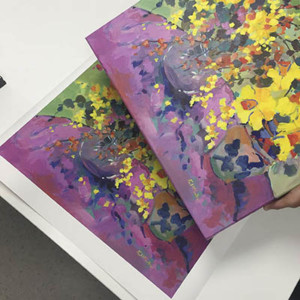
As an artist, are giclée prints worth it?
The short answer is yes.
Simply are there instances where yous could consider lower stop prints?
Again, the answer is aye.
Permit's kickoff with the nuts first though, do you know the difference between a true giclee print and an "art impress"?
Allow's brand certain we're on the same folio, then we can motion on to the more than juicy questions like: Which is the ameliorate option for you? Does reproducing artwork reduce its value? How do you lot keep costs downward when producing prints?
Art printing or giclée printing?
To clarify, both of these terms refer to the exact same process. Archival pigment printing.
Some in the industry volition say the term "giclée printing" is not as pop anymore, however google trends actually bear witness searches for "art printing" and "giclée press" are almost equal. So feel free to call the process any you like!
What does giclée mean?
Giclée (pronounced "zhee-klay") is based on the French give-and-take "gicleur" which literally ways "to squirt out".
According to Wikipedia, the word was adopted by a printmaker, Jack Duganne, in the ninety's for fine fine art digital prints made on inkjet printers. It refers to the way an inkjet printer works, where it squirts or sprays the ink onto paper.
What is the divergence between a giclée and a impress?
A giclée print (also called archival pigment print) is the closest possible replication of an original artwork that is possible. The process uses pigment-based inks, archival quality paper and a wide format inkjet printer. It also requires a certain degree of skill and know-how when it comes to the printer (person doing the task for you).
On the other paw, a traditional print volition typically utilize dye-based inks or toners, a lower quality printer and paper/cloth that is cheaper. This means the print is less durable, can be damaged more than easily, will fade faster and won't last as long.
So, allow'south summarise what we've learned.
A loftier quality art print must meet the post-obit criteria:
- High resolution artwork capture.A highly detailed print starts with loftier resolution artwork capture (300 dpi or higher). Capturing all the particular and texture of the original is imperative in producing a print that "looks just similar the original" and also 1 that tin can be printed in any size.
- Paint based inks.This is important for colour accuracy and is a major selling point for giclée printing compared to traditional art press. Nosotros use a 12 colour process which is better for replicating the look of the original artwork and provides amazingly brilliant colours. Side annotation – colour accuracy volition as well depend on the skill of the technician (person working on reproducing your artwork), then choose wisely.
- Archival quality/museum-grade paper.We're talking about fade resistance and longevity hither. Basically, this ways it should last 75-100 years if cared for properly.
- Broad format inket printer.Non all inkjet printers produce giclée prints, the ones that practice volition spray paint-based inks (and concur up to 12 colours) matching the colour precisely to the original.
Does reproducing artwork devalue the original?
Reverse to what some might recollect, reproducing artwork volition not decrease the value of an original.
In fact, giclée prints can actually increment the value of an original. Too because of the high quality, these prints can often increase in value over time. This is of course dependent on the artist. But it's peculiarly true if the artist gains more recognition and if they are a express-edition impress.
Part of the selling point of reproducing your artwork is making it available to more than people.
At that place is a small market of potential buyers for original artwork. This is due to price and mayhap likewise popularity of collecting art as an investment.
One of the biggest reasons people purchase art these days is aesthetics, it's for the dear not the money, co-ordinate to contempo research. In other words, the majority of people will buy a piece of art if they "dearest it". They are oft less concerned if it's an original and will appreciate in value.
This brings u.s.a. onto the next point.
Equally an artist, are giclée prints worth it?
As mentioned in a higher place, reproducing your artwork is as well a business concern decision. Once you sell an original piece there are no more than profits to be fabricated. Yes, you tin can sell the original for more than, merely you only have a limited corporeality of time to create original pieces then it's not practical if you're trying to scale a business concern.
With high quality fine art prints, not only do yous take a chance to make more than from each piece, but you have a larger marketplace of potential buyers to sell to. With higher volumes and a broader market, at that place is greater chance of your work becoming more well-known and accessible thus raising your profile.
Do you need giclée prints or can yous get with cheaper, traditional prints?
This is more than a marketing/concern determination rather than what best presents your artwork.
Information technology will serve y'all well to acquire the nuts of marketing, such every bit the 4 P's (toll, production, placement and promotion) and target audiences.
A lot will depend on your target market and cost points. Start by asking yourself, who is my audience? What are they willing to pay for art? What sizes and mediums are they looking for? Where will I sell the prints? Think about shipping costs. If you don't demand your prints to "final a lifetime" (and you don't merits they volition in your marketing) and then admittedly, you could settle for lower stop prints. However, if quality is important to yous and your customers then just fine fine art giclee prints are guaranteed to last.
Check out the how to sell your art guide for more tips on this.
Tips to keep giclée print costs downwards
Aye, giclee printing is more costly than traditional printing. Like with everything, yous go what you lot pay for.
Fifty-fifty within the globe of giclée prints, there are bully variations in technique, toll and quality between printers. Think the process? High resolution image capture, type of inks used, colour correction, type of printer and expertise of people doing the job.
So if you're shopping effectually for a giclée printer brand sure y'all understand their fine fine art reproduction process and know what you're getting. Non all giclée prints were created equal.
Other than shopping around between printers how can you look to save?
Digitising your artwork.
This is generally not overly costly, merely it can be depending on the book of work. This is 1 of the many benefits of scanning over photography. Our big format flatbed scanner has a huge table size of 1400 ten 2200mm which allows u.s. to scan multiple artworks at once. We also offer discounts for multiple artwork scans (called a table scan). Bank check out the particular on the artwork scanning page.
Choosing your paper.
When selecting a paper, yous need to cistron in finish, brightness, weight, durability and importantly your target market place as we discussed in a higher place. Perchance y'all don't need to the best of the all-time when it comes to paper or material. Think about how much y'all plan to sell your prints for, as well as sizing options as this will all factor into how much you can spend on producing the prints. Read our paper stock guide for more than detail on options we offer.
Creating limited editions
The great thing virtually the fine fine art reproduction process is you don't have to print everything in ane go. Once yous have digitised your artwork and have a high resolution file, you can print as you need which allows yous to cater for market demand.
Open up editions will allow you an unlimited source of income from ane slice of artwork.
However, these are usually not as valuable to fine art collectors equally express editions. Make sure you research your market earlier deciding as it may not be an outcome if yous're not selling to serious collectors.
Fifty-fifty with express edition print runs, there is no demand to impress all at once. As long as y'all ready the full number for the edition and proceed a detailed record of how many have sold, you lot tin print on need. Since no more prints tin can exist created after they are all sold, artists are usually able to control a college price tag for this type of print.

Source: https://cie-elle.com.au/are-giclee-prints-worth-it/
0 Response to "What Is the Difference Between Framed Art and Giclee?"
Post a Comment